


« Jacqueline Steck has entered the building | Main | Great opportunistic »
Share Festival, 2008
Share Festival, 2008
Friday and Saturday, October 15th &16th, Torino, Italy
I've recently arrived as a resident at Fabrica in Treviso, Italy. On my second weekend I headed to Torino for the Piemonte Share Festival, held at the Accademia Albertina from 11th of March till the 16th. The festival is running in their fourth year with an agenda to review digital arts, co-curated by Bruce Sterling. He is a guest curator and chairman of the Piemonte Share Prize jury because one of the premises of the show is that science fiction plays a key role in forming new paradigms, with more of a vision for enabling new attitudes and practices than that of the scientific community. There were only six pieces in the show, though I was expecting more. Regardless, all six projects were involved enough to satiate my thirst for new art; they dealt with overcoming their digital origins and acquiring a perceived tactile reality.
Christine Sugrue (U.S.A.), “ Delicate Boundaries”
Christine's piece has come a long way. I remember when she first started the project, and then it was just a conversation. Now it's a screen with bugs crawling on it and out of it. When you approach and touch the screen, the bugs appear to crawl out of the screen and onto your hand and arm. If you touch both of your hands together, the bugs will crawl from one arm to the other. If you withdraw your arm, the bugs disappear and regenerate on the screen. You might wonder how people intuitively know to touch the screen, but they just do. It's amazing. When the bugs come "out", and people respond to it. It's like one of those ideas that seems kinda dreamy, but in reality it works really well. This project also won the Share prize. Emanuel Andel (Austria), “Knife.Hand.Chop.Bot” I first heard about this piece from the owner of the bed & breakfast that I stayed at, and it sounded more dangerous than any other project I've ever seen. A large robotically controlled kitchen knife pumps up and down in between the wedges of a hand laid flat on a table. There are sensors underneath of the hand that detect when it's sweating, and if it is, the knife pumps faster; it is a reference to the "Five Finger Fillet" knife game. Unfortunately, when I got there, the machine was turned off, and it was off for the duration of the festival. I only saw it once, when he demonstrated for the judges. Sad, but true. A great idea that sounded psychologically intense but in reality is inaccessible. This happened to be one of the runners up for the Share prize, but without it working, its effect on me was weak. This piece was organized into two parts: a desk with a projection on top of it, and a projection on a wall where, when a user types their name via a keyboard, it displays that on the wall, and retrieves all images related to it. The table shows a visualization of all the IP addresses where the data has been found. This was probably the most fun to play with. It's a projection of a dandelion with a microphone in front of it. Whenever you blow into the microphone or make some sound into it, it blows off the petals and they fly spinning off. The sound that you make, too, echoes, which adds to the cutesiness of the piece. When all the petals are blown off, it regenerates. Even though I have seen projects similar to this, the large projection of the dandelion made it seem more real, and more fun to play with. This piece was quite humorous. As a piece of wood is carved, it makes sound through data that is routed through synthesizers. The result is that you sit through this musical performance where someone stands at a lathe and carves a piece of wood (the data of which is fed to synthesizers), and at the end of it have a carved piece of wood. This was a half-globe tent with a small entrance that beckoned you to enter. When you sit inside, round a half-globe mirror, there are small felt circles on the floor. When you press the felt circles, which generate an abstract shape and corresponding sound. A "conductor" sits in one spot in the center with controls for generating the number of abstract shapes and sounds that the other person has activated. It's really quite a beautiful piece with the projection on the inner part of the tent and the reflection in the half mirror ball. The next day I caught some panel presentations by Julian Bleecker, Massimo Benzi (the creator of the arduino board), Donald Norman, Bruce Sterling, and other "new media" visionaries. Julian Bleecker clarified a phrase that he uses frequently, which is "the 'blogject' internet of things". The blobject in this context means taking things from your real life and putting them in a second. Some examples of blogjects include the "PigeonBlog", where a GPS device is attached to the backs of pigeons and tracks pollutants in the air while it is flying. This data is then sent back to the internet and updates a blog that visualizes pollution. Another blogject project mentioned is a coconut fitted with a cellphone and sensors to detect the noise level in the environment. This coconut is placed in a residential area near an airport where many residents call to complain about noise. The coconut automatically detects noise on its own through its sensors, and calls up the aviation center with its embedded cellphone. No longer do we need to intervene to transmit information relevant to our human concerns; other devices can blog for us. Following that, Donald Norman and Bruce Sterling had a lovely antagonistic debate about everything. Bruce asked what the future would be like and Donald said it would be invisible. Bruce thinks that hackers and tinkerers now will not have anything worthwhile in 20 years time, because the technologies they're using will become obsolete. All other mediums will die and, in his view, new media will be the only media left by which artists can encode information about an artwork and still pass on for posterity. One thing that Bruce is emphatic about is that new media art is getting old and that it should not be dependent on machines. I agree with all of this except that I don't believe "new media" is at all a useful term to use for an interactive discipline that seeks to define itself in terms of art and it's relation to society. New media just says to me, this is newer than that, and that makes it more relevant, which doesn't make sense since most technologies had already been developed in the 90s and artists are just now manipulating them. Regardless, the two days I spent at the festival were worthwhile in understanding "new" trends in "new media". Whereas new media of the 90s was net art, its current manifestation is based on a virtual imposition onto physical space, an "augmented space". I learned from this festival the value and accessibility of making ideas tangible, which empowers us to avoid mass produced consumption and suit our own individual tastes in a DIY culture.
Originally
from 

D3D (Italy), “Virtual Identity Process”
Yamada Kentaro (Japan), “Tampopo”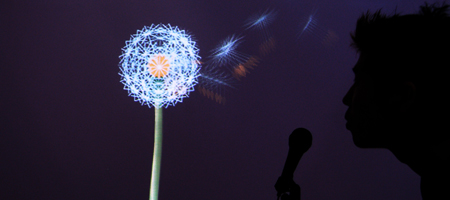
OWL PROJECT (United Kingdom), “Sound Lathe workshop”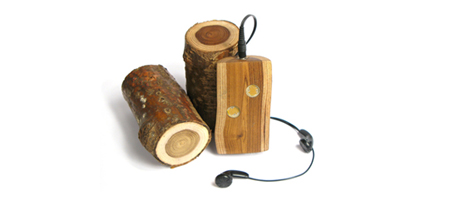
Scenocosme (France), “SphèrAléas”
~~~~~~~~~~~~~
The "festive" part of the Share Festival were the nightly parties, as part of the scheduled program. The only party I made it to was on friday night, in an ecologically sound architect's office made from a reconstructed parking garage. I met Bruce Sterling there for the first time, and that night he carried around a fabricated ball which looked like a rubik's cube, but was made of angled pieces that together form a sphere. Really, its quite amazing what you can fabricate these days. Later that night at the club "Hiroshima", the Reactable table was performed, along with the main electronic act Autechre.
ReBlogged by jacqueline on Mar 25, 2008 at 02:57 PM
Posted by jacqueline on Mar 25, 2008 at 02:57 PM
Comments
Post a comment